

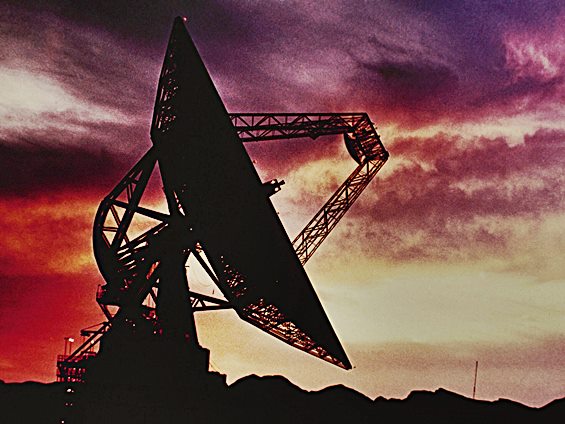
On a summer night in 1977, a radio telescope in Ohio caught something extraordinary. It wasn’t a shooting star or a satellite drifting across the sky. It was a signal—seventy-two seconds of radio energy from the direction of the constellation Sagittarius. Astronomer Jerry Ehman, scanning the printout, circled the anomaly and scribbled one word in the margin: “Wow!” That hasty note gave the signal its name, and nearly fifty years later, we’re still wondering whether it was the first hello from intelligent life beyond Earth.
The Wow! Signal stood out because it didn’t behave like random background noise. It wasn’t a steady hum from a nearby planet or a burst of interference from Earth. It spiked, peaked, and faded in exactly the way astronomers expect a distant, intentional signal to act. It came through on the frequency of hydrogen, the most abundant element in the universe, which many scientists suspect would be the cosmic equivalent of a universal calling card. If you were trying to send a message to anyone out there, hydrogen’s wavelength is the place you’d likely use.
What makes it even stranger is how brief it was. Seventy-two seconds, and then it was gone. The telescope couldn’t be swiveled back fast enough to catch it again, and despite decades of scanning the same part of the sky, no one has ever heard it since. Some skeptics suggest it was a fluke, maybe a signal bounced from Earth or a natural burst we don’t fully understand. Others argue that its clarity and precision are too perfect to be dismissed. The frustrating part is that science loves repetition. One hit isn’t enough. Without a second signal, the Wow! remains a tantalizing mystery without proof.

Still, the story grips people because it brushes so close to the question humans can’t stop asking: are we alone? The universe is vast beyond comprehension—hundreds of billions of galaxies, each with hundreds of billions of stars. Statistically, it seems almost impossible that we’re the only intelligence to emerge. And yet, here on Earth, we’ve been listening for decades and only once caught something that looked promising. That silence can feel eerie, like walking into a crowded room and hearing nothing but your own footsteps.
The Wow! Signal has seeped into pop culture too. It’s been the inspiration for novels, documentaries, and countless late-night debates. Some see it as a whisper from civilizations too far away to reach us again. Others think it’s a reminder of how little we know, a cosmic nudge saying, “Keep listening.” For scientists, it’s both a frustration and a motivation—the perfect mystery that keeps radio telescopes trained on the sky, waiting for another anomaly to slip through the static.
What makes the Wow! Signal special isn’t just the possibility that someone out there tried to talk to us. It’s the way it captures that mix of curiosity and humility that defines science. We search, we wonder, we scribble “Wow!” in the margins when something breaks through the noise. Maybe it was a one-off glitch, or maybe it was the first knock on the door from neighbors we’ve yet to meet. Either way, it reminds us that the universe is still full of unanswered questions, and every night the sky is broadcasting stories we haven’t yet learned to translate.